

Garlic, a versatile and beloved ingredient in kitchens worldwide, possesses a peculiar phenomenon that often puzzles and surprises home cooks and culinary enthusiasts. When subjected to the process of lacto-fermentation, garlic cloves occasionally undergo an intriguing transformation, turning an unexpected shade of blue. This phenomenon has sparked curiosity and debate among food enthusiasts and scientists alike. In this article, we will explore the science behind why garlic can turn blue during the lacto-fermentation process and unravel the mysteries surrounding this captivating occurrence.
Understanding Lacto-Fermentation: To grasp the phenomenon of garlic turning blue during lacto-fermentation, it’s essential to comprehend the basic principles of this ancient preservation technique. Lacto-fermentation is a process in which beneficial bacteria, primarily lactic acid bacteria, convert the natural sugars present in food into lactic acid, thereby creating an environment unsuitable for harmful bacteria to thrive. This process imparts a tangy, distinctive flavor to fermented foods, along with numerous health benefits.
The Role of Anthocyanins: Anthocyanins are a group of pigments responsible for the vibrant colors found in many fruits, vegetables, and flowers. These water-soluble pigments are commonly associated with hues of red, purple, and blue. Garlic contains small amounts of anthocyanins, which are usually concealed by the garlic’s white coloring.
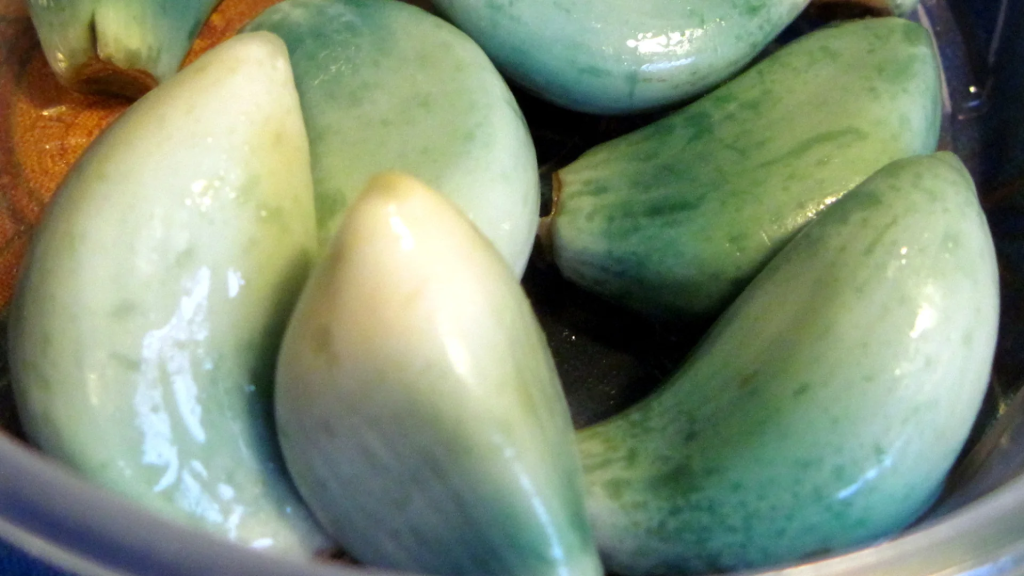
Garlic’s Hidden Anthocyanins: When garlic cloves are subjected to the lacto-fermentation process, a chemical reaction occurs between the garlic’s sulfur compounds and the acids produced by the lactic acid bacteria. This reaction releases hydrogen ions, leading to a decrease in the pH level within the fermenting environment. As the pH level drops, the anthocyanins present in garlic are more likely to become visible, resulting in the garlic cloves acquiring a distinct blue or bluish-green tint.

The pH Factor: The pH level plays a vital role in the manifestation of the blue color in garlic during lacto-fermentation. The acidic conditions created by the lactic acid bacteria not only enhance the preservation process but also trigger the transformation of the anthocyanins in garlic. The lower pH disrupts the garlic’s natural color, making the anthocyanins more visible and causing the garlic cloves to turn blue.
For precise pH level monitoring in your fermentation process, consider purchasing a Digital pH Tester available on Amazon.
Variations in Color: It’s important to note that not all garlic cloves turn blue during lacto-fermentation. The intensity and occurrence of the blue color can vary depending on several factors, including the garlic variety, the age and quality of the garlic cloves, the fermentation conditions, and the presence of specific bacterial strains. Garlic cloves with higher anthocyanin content are more likely to exhibit a vibrant blue coloration.
Is Blue Garlic Safe to Consume? The appearance of blue garlic may raise concerns about its safety for consumption. However, the discoloration is purely a cosmetic change and does not indicate spoilage or any health hazards. In fact, lacto-fermented blue garlic retains its flavor, aroma, and health benefits just like its non-blue counterparts. The garlic can still be used in various culinary applications, adding an intriguing visual element to dishes.
The phenomenon of garlic turning blue during lacto-fermentation is a captivating scientific puzzle that has fascinated food enthusiasts and scientists alike. The interaction between the garlic’s sulfur compounds, anthocyanins, and the lactic acid bacteria creates the conditions necessary for the manifestation of the blue color. While not all garlic cloves undergo this transformation, the occurrence adds a touch of mystery and intrigue to the process of lacto-fermentation. So, the next time you encounter blue garlic in your ferments, embrace its colorful presence and savor the

 re·dact
You must be logged in to post a comment.